Your Database is Your Business
 Chance Brown··4 min read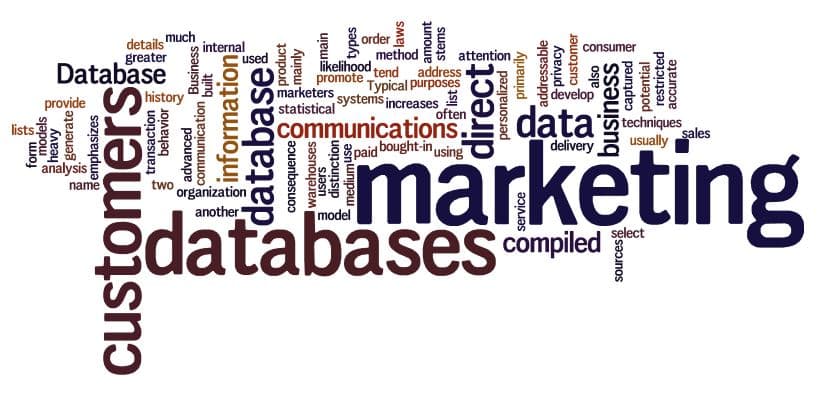
From the archive. I first wrote this in January 2015 on my old blog. Some of the tools, names, and numbers have changed since, but most of it holds up.
If you look back at last year's performance, what sticks out to you? Where did your business come from? What lead generation sources worked and didn't work? These are all questions you should be asking yourself on a pretty regular basis so you can adapt your strategy to maximize the effectiveness of your time and effort. Let's face it, there are so many options out there for you to advertise, market, or promote your business that you really have to measure the performance of each option regularly or you might find yourself wasting a good deal of time and money with little to show for it.
The question is: While these avenues certainly may feed your business, what is the basis for your business?
I would argue that it is your database, plain and simple. Sure, all of those marketing efforts you do using that database or to help create the database are important, but your database and how you manage it are really the only asset you have in a real estate business. Think about it this way: let's say you were going to retire tomorrow and wanted to sell your business. What would you sell? Your signs? Lockboxes? Web domain? Ok, so you might, but that wouldn't make much of a retirement fund. No, your only real asset to sell is your database.
Going back to the discussions we've had before about having an entrepreneurial mindset and working on your business while you work in your business, at some point you have to think either about passing your business down or selling it. Note that I say, "you have to" because no entrepreneur would work decades to build a business and then just walk away from it. Yet, we see that happen all of the time in real estate. Whether it's an individual agent doing a good business or even sizable brokerages, I've seen them just leave the business with little or nothing to show for the years of hard work.
Realtors are entrepreneurs. Entrepreneurs are business people. Business people plan with the end in mind. They create sellable assets.
So, to return to our answer of what asset you might sell, here are five things you can do to make your database an asset that will either allow you to sell it later or produce you passive income for years after your retirement:
1) Treat your business like a franchise
The beauty of franchises is that someone else did all of the work ahead of time. The franchisee simply picks up the playbook and starts operating, paying a royalty to the franchisor. Could someone pick up your playbook and start their own business that is just like your business from day one? Which brings us to...
2) Create systems and processes that work
A database sitting there on your computer, in whatever format you choose, is useless unless you have systems and processes in place that make it create revenue for your business. If you don't have those in place, what playbook would you sell?
3) Make it scalable
Your processes and systems will grow and expand as your business does. So, you will scale these processes and systems to make them work for you at the time. Starting with the end in mind, as we discussed, you should set up your initial systems and processes to easily scale as you add business or staff or locations.
4) Be consistent
Once your systems and processes are in place, they must become hard and fast rules. You must execute on those to build your business and prove your track record to those you would sell your business to in the future. A great plan without execution will only create a skeleton business. Once a potential "buyer" looks beneath the surface, they will see that there is no proof that any of your systems or processes work, making your business worthless to them.
5) Reevaluate regularly, recreate as needed over time
It is of vital importance that you set aside time on a regular basis, quarterly at least, to step back and evaluate your business. Look at what's working and what's not. Make changes as you deem them necessary. That being said, don't be too hasty to make changes. Make them prove out over time that they aren't working before you make wholesale changes. Too many changes will make your franchise model look like it's only out there chasing trends. Think of McDonald's. Whether you're in Japan or Omaha, the processes are the same and have been for decades. It's why a Big Mac in Omaha tastes the same as a Big Mac in Japan. Sure the menu may change here and there, but the underlying model remains steadfast. That's what you're looking for.
So, at the end of the day, when you're ready to leave real estate and retire, will you be McDonald's or will you be one of the countless, forgotten restaurants that popped up, had a good run, and then disappeared? Take the steps now to ensure that your legacy in this business is not soon forgotten. Only you have that capability.

Written by
Chance Brown
Broker/Owner of CB&A, Realtors, Commissioner on the Texas Real Estate Commission, and host of Top 5. He writes about the real work of building a real estate business. More about Chance → Work with Chance at CB&A →
Read next
The Top 5 Qualities of Great Agents