Make Your Business W.E.T.
 Chance Brown··4 min read
From the archive. I first wrote this in October 2014 on my old blog. Some of the tools, names, and numbers have changed since, but most of it holds up.
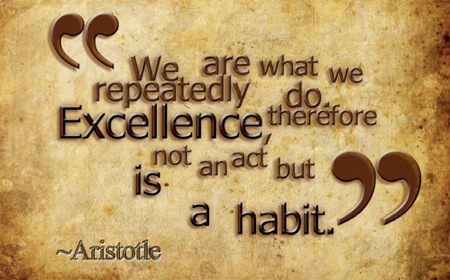
When you think about how you want your business to perform, you probably come up with a lot of ideas. Big, general terms like Customer Service, Professionalism, and/or Expertise probably come to mind. One of the words that you should focus on as you start planning for next year is consistency. Will your clients get the same experience every single time they deal with you or someone from your team?
If you think about companies like Starbucks, Apple, and McDonald's, the one thing you can count on is that whether you're in Los Angeles or Houston or Miami you can count on the experience and/or product being nearly identical every time. That's the kind of consistency you want in your business. That's the kind of consistency that takes your business from ordinary to the top of the mountain we are all climbing.
You have to make your business W.E.T. - Work Every Time
Making your business W.E.T. takes three steps to complete. While these steps may seem easy on the surface, the hardest part is the level of inspection and introspection that they take. You really have to sit down, be honest with yourself, allow criticism without taking it personal, and use the info as a tool to make your business stronger. That kind of deep look at your flaws, real or perceived, can be tough. So, now that you know that, let's take a look at the three steps.
Know Your Product
For this section, let's assume that product means everything you offer to your client as part of your service as their agent. You need to know every touch point with your clients, every service you perceive you provide to your client, and every single thing you think you do that brings value to your clients. If you've never done this before, you are going to have some fun.
Now, for the hard part, you have to ask your clients what they think. Just because you think that something is of value doesn't mean your client does. I am a big fan of Scott Stratten's ideas on surveying clients. Make it simple. Ask these three questions: What should I start doing? What should I stop doing? What should I continue doing? It's that easy. Use a service like Surveymonkey to make it confidential so you get real, honest answers.
Using the results of the survey and what you came up with, compare and contrast the answers, identify trends or commonalities, and prepare for step 2. Before you do that, remember that just because your client does not acknowledge value in something you do doesn't mean that it isn't valuable. It might mean that you need to do a better job showing them the value. Don't trash something just because the client didn't mention it.
Know Yourself
Before you can move on from Step 1 in a way that is going to change your business for the better, you really have to know yourself. Using the companies above as an example, one thing you can say about them all is that they are very aware of what they can and can't do. Better yet, let's take a look at a company that didn't. In the 1980's Sears, a bastion of American business, nearly went bankrupt. The reason behind their failure was that they tried to be everything to everyone, including bank, travel agent, hardware store, and more. What happened was they failed at all of them.
You have to know your strengths and weaknesses. If your clients demand something you cannot realistically provide consistently, you will fail at it. So your choices become either don't do it or hire it out. You have to make that decision, but in this day and age it should be relatively cheap to find a software, service, or virtual assistant that can do something for you cheaply. The key is that you must make it part of the plan and it must be done every single time. So, on that note, let's move to Step 3.
Plan It Out
A quick note before we talk systems and plans. As you well know if you've been in the real estate business for more than ten minutes, every client is different and unique. The approach you take with each client is going to differ based on the unique needs of that client. What we are addressing here is an underlying minimum level of consistent service. What you do over and above that will be dictated by your client.
That said, now that you know what you need to do for each and every person you interact with in your business the next step is put a plan in place. Determine, first and foremost, whether or not you will have different approaches based on the type of person you are interacting with. For example, how will you deal with a referral versus an internet lead, client versus prospect, etc. Once you've made that decision, start by laying out the client experience from initial contact through your post-closing communication. Now, systematize every step. Make it as automatic, as habitual, as possible. Eat, drink and breathe it every day. Make sure all of your team members, if you have a team or assistant, are on the same page. Use checklists if needed.
As word spreads of your service, you will get busier. Your business will grow. It will become more important that you either automate the service or have very capable people to do it for you.
Making your business W.E.T. can take some time. It can cause you to really take a look at yourself in an uncomfortable way. In the end, if you are looking to perform at the highest level, it is a pivotal step in your success. You have to have a minimum level of service that every client receives no matter what and that minimum level of service has to be excellent. If not, you might end up like Sears.
P.S. - This planning exercise should be an annual exercise. Now, go be great!

Written by
Chance Brown
Broker/Owner of CB&A, Realtors, Commissioner on the Texas Real Estate Commission, and host of Top 5. He writes about the real work of building a real estate business. More about Chance → Work with Chance at CB&A →
Read next
Using Facebook to Create Community