5 Tips for Starting a Real Estate Team
Transcript
Tap a timestamp to watch from there
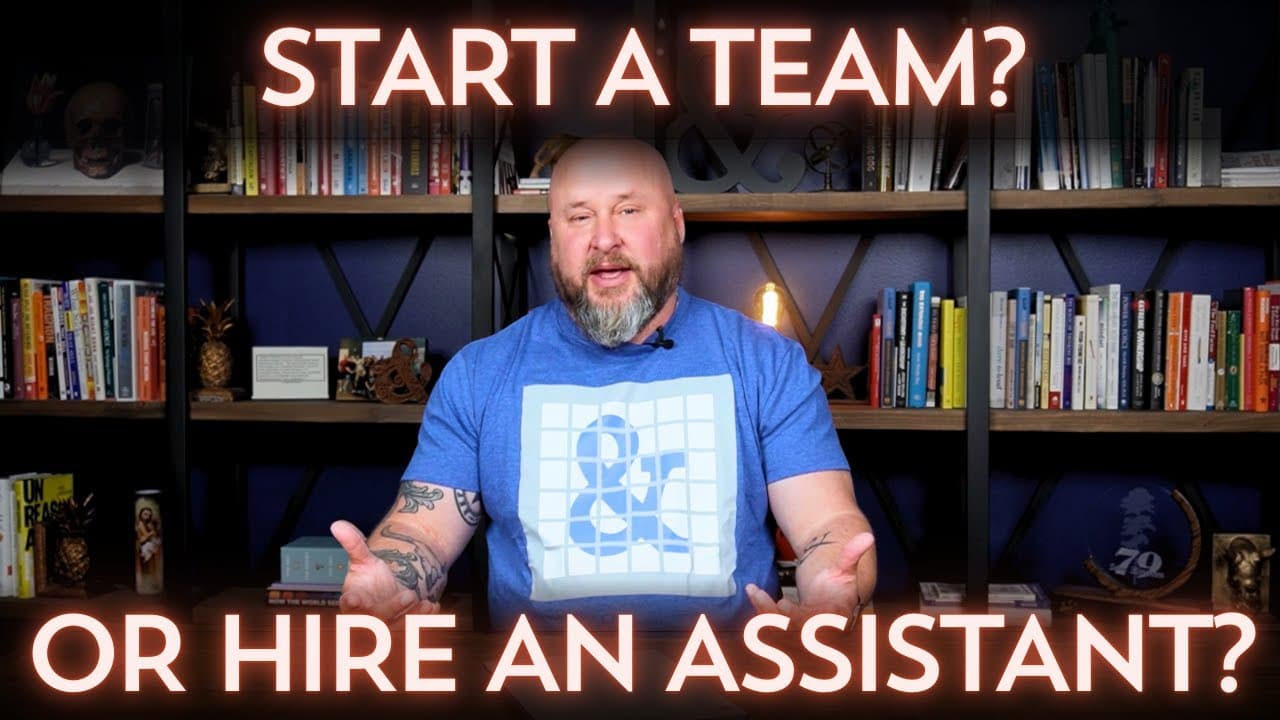
The idea of building a real estate team can be a super exciting thing for an agent. It's the next logical step in growing your business as long as you do it right. In my position as a broker, I've have had the opportunity to watch agents do this very well, do it wrong, make mistakes. I've made mistakes myself in trying to start a team. And so today I want to deliver a little bit of information, a framework and structure on how to get this right and not go broke in the process. How do we set up our team? Who do we hire first? What do our agreements, things like that look like? And how do we not make cultural mistakes that kill our team before we even have the opportunity to really get it up and running right? Hey, my name is Chance Brown. I'm the broker owner of CB&A Realtors. I make video content for real estate agents because I'm passionate about helping them build great businesses. So before you go out and want to start a team, there's a question that you need to answer. Are you actually over capacity on revenue generating opportunities or are you just exhausted and tired and overworked and you think a team will help? Because one of those things is a capacity issue. And in a capacity issue, yes, a team can be very helpful. The other is a systems and a processes issue. And adding people to that is actually probably going to cause more problems than it solves. So if you're busy and you're overwhelmed and you're exhausted and you're just looking for help, there are ways to get that without starting a team because that might mess things up. So here's the threshold that I would suggest. If you're not doing probably 20 to 25 transactions a year, you're probably not ready. You're probably not in a right position to bring on additional help because you're probably not turning away business because you can't handle it.
And that really is the door that opens itself up to say, "Okay, I really need to bring on some help here." So, let's talk about the first person you're going to bring onto a team. I think that in a lot of places what we hear is you need a buyer agent to help handle buyer leads while you drum up listings and all of that. And that sounds great. The problem with that is that buyer agents are a revenue share. They're an expense to your team that you may not quite need yet. The other piece of this puzzle is if we don't have systems and processes that are different from when we were a solo agent that are built for a team, we're going to run into problems. So I would tell you the right first hire is actually an administrative transaction support person. You may find that once you get that person trained and working the way that you want that that's all the team you need because that just frees up a lot. You may find that it also gives you the opportunity to generate more business which then requires another hire. But before you rush out and get a buyer's agent, I think that really what needs to be is the administrative support and the systems and processes that are going to make those buyer agents successful once they're on the team. So, the compensation structure is where I see a lot of teams get off on the wrong foot right out of the gate. There are a lot of teams out there that are winning awards for production and they've got, you know, top producers spread all over their stuff and that team leader doesn't have a pot to piss in because their compensation structure was off from the very beginning. So, the second question that I ask agents when they come to me to talk about building a team is, "What is your cost of goods sold?" And if you don't know what that means, it's an accounting term. That literally is how much does it cost you to do your business? And if you don't know the answer to that, it's really, really hard to set up a proper compensation structure. If you're out there buying leads or doing this, your cost of goods sold is higher and you need to have compensation structures that allow you to continue to do that. If you're not and you're working off organic leads, maybe you're a little more lenient.
There's no right or wrong to the compensation structure. The wrong happens when we don't know the underlying costs of the business and we're not covering those because you can't make up for that in volume. Secondly, there has to be some level of accountability here. You have to be holding the agents that you're bringing onto your team to production minimums. Those need to be in writing. I cannot cannot suggest more highly that you hire an attorney to write your compensation agreements with your team, including and especially what happens when a team member leaves. This is a place where I see teams break down all the time. This is a big business. This is going to make you potentially a lot of money or it could cost you a lot of money. Spend the time and the effort to get it right. get an attorney to help you write these compensation agreements, but then once they're in place, let's make sure we're holding people accountable to the things that they're supposed to be doing because otherwise they are just wasting your money. So, you can have all the right structure, you can have the compensation, you can have all the things going well, but here's the transition that a lot of team leads fail to make that really hurts their team.
Keep going
 WatchShort
You are both the ceo and employee in your business. You need both mentalities to succeed
Aug 6, 2026
 Watch3:59
Should You Start A Real Estate Team?
Dec 15, 2025
 Watch39:40
FULL EPISODE | The Standard with Chance Brown | Episode 4 | Neighborhood News with John Garrett
May 5, 2025
 Watch27:28
FULL EPISODE | The Standard with Chance Brown | Episode 3 | Consistency with Katie Day
Mar 31, 2025
 Watch3:47
Looking for the right Brokerage to call HOME? Here is everything you need to know before deciding!
Feb 13, 2025

A Leadership Vacuum
Oct 31, 2024